

Introduction to Long Distance Running
When preparing for a big race or event, adding the right number of long runs and the right distance can be one of the most important aspects of your training plan. These runs require you to stretch outside of your comfort zone and into a new realm of long distance running.
As beneficial as long distance runs can be, they do pose more of a risk to injury due to the nature of pushing your body to limits it may not have seen before. Keeping this in mind, there are many precautions that runners can take to mitigate these risks and enjoy the multitude of benefits associated with reaching certain milestones and being well-prepared for race day.
Here is my list of the top 10 long distance running tips that all runners can follow to be as prepared as possible.
Tip #1 – Determine Your Long Run Distance and Schedule
The goals of each runner are different, and knowing your current running capabilities as well as your long distance running goals are crucial in creating a schedule.
To start, long distance runs should take place every 1-2 weeks depending on how aggressive you want to be. If you are planning your first marathon of half marathon, expect to have at least 10-12 long runs in your training plan.
The distance of your long run should be based on the furthest distance you have ran in the past 60 days. Anything beyond about 60 days may no longer be relevant to your current training. Because the intent of the long run is to stretch your capabilities, I recommend adding anywhere from 10-25% distance on top of your current capability.
Newer runners who are just starting to increase their distance may be able to extend more quickly than a more experienced runner who is already capable of running 20 miles or more.
For example, if your longest run in the past 60 days is 6 miles, it would be reasonable to push yourself for a 7-8 mile long run.
It is important to note that your body needs time to recover after a long distance run, and weekly increases may cause your body difficulty in recovering.
After working with many marathon runners, I found that increases in distance should not take place every week, rather every other week with slightly shorter distances in between. An example would be a 6 mile run, followed by an 8 mile run, followed by a 6.5 mile run, followed by a 9 mile run, and so on.
Short and Medium Distance Runs Should be in the Weekly Schedule
Preparing for long distance running requires a lot of training runs in between. It would be unreasonable to think that your training plan would consist solely of long distance runs.
Typical training plans have 3-5 runs per week and include a combination of different running types, such as easy tempo runs, speed interval runs, and long distance runs.
At a minimum, be sure to have at least one easy run and one interval speed run built into your weekly regiment. This will allow the long distances to be much more manageable.
Tip #2 – Add Strength and Flexibility Training to Your Routine
Long distance running can be very hard on your body, especially if it’s not prepared for what’s to come. Adding mileage to your weekly routine is great, but most of the time it’s simply not enough to allow you to keep going.
Although running works many of the major muscles in your lower extremities, strength and flexibility training will build many of the smaller muscles around your joints that can help prevent injury or early fatigue.
Runners who train extensively for upcoming races often despise the thought of strength training, as many believe it prevents them from adding miles and somehow limits them as a runner. But the truth is that those runners who do hit the weights often see vast benefits in their speed and distance.
Additionally, working on your flexibility and range of motion is a substantial element for injury prevention as well as maintaining speed and posture during long distance races.
Tip #3 – Create a Gear Checklist
Nothing is more frustrating than hitting the trail, getting a mile from home, and then realizing that you forgot your heart rate monitor. The fear of not knowing how well your body is performing can ruin what could have been a great run.
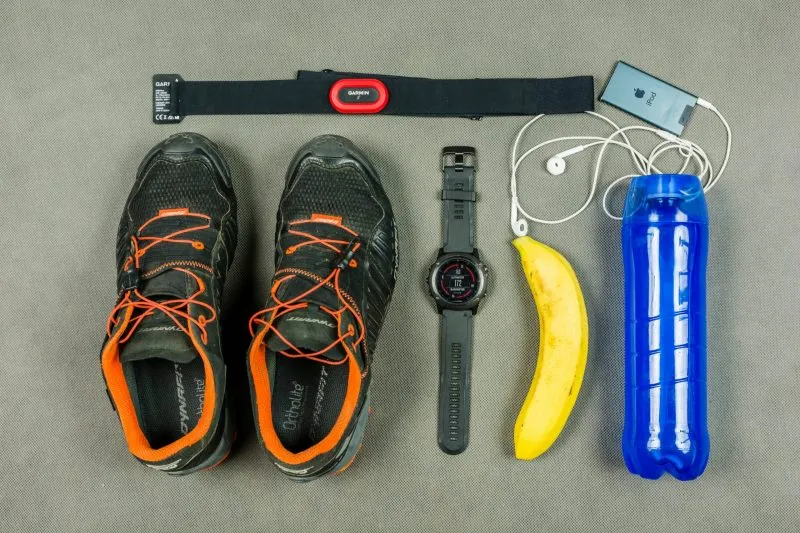
Or maybe you left early in the morning before the sun came out and didn’t think about sunscreen – imagine the pain and embarrassment when 20 minutes after you started, the sun is blaring down on you.
We all forget things, but creating a long distance running checklist for the essentials is a method I have been using for years. You may not know exactly what you need during your first couple of long distance runs, but over time you will begin to make changes to your checklist as you learn what works and what doesn’t.
The Long Run is Not the Time to Test New Gear
Suppose your spouse fully supports your long distance running goals and buys you a new running bag to store your water bottles, your phone, your wallet, etc. You’re thrilled to take it on your upcoming 14 mile run only to find out that after a few miles it’s started to rub against your shoulder. No big deal for a few minutes, but after 10 miles there’s blood coming through your shirt.
We all get excited to try out new gear – the new trainers with the carbon-fiber plate, the new water-wicking hat, the new water bottle with a hand strap. Unfortunately, not all gear is best suited for you. If there’s something you want to try out, try it out on one of the short runs.
Each Long Run is an Opportunity to Learn
As you become a better long distance runner, you will naturally start to gather a routine. You will learn the fuel and hydration that works for you, the socks that are the most comfortable, whether or not you need nipple guards for chaffing, and so many more intricate details of long distance running.
With each long distance run, I recommend reviewing your checklist. Was there something you wished you had on you? Was there something you thought you would need that you didn’t? Continue to modify this list over time, and each subsequent long run will only get easier.
Tip #4 – Sleep Well the Night Before, Sleep Better the Night Before That
We all know that sufficient sleep helps us function. Allowing your body the time it needs to recover from the day is critical for endurance running. However, the truth is that many runners have a difficult time sleeping before a big race. The excitement, the nerves, the anticipation, all keep us awake at night.

The good news is that it’s not the night before a big run that’s most important. It’s the night before that. Many long distance races take place on Sunday mornings, and many long distance runners hope to be asleep at a decent time on Saturday night.
What they will find out is that the quality of sleep they had on Friday night is even more important. So, when your race day approaches, don’t think that you can stay up partying two nights before and then settle down the next night and expect to be well rested.
Tip #5 – Nutrition for Long Distance Running
When it comes to long distance running, sticking to a healthy diet makes a big difference for runners. Being able to maintain body weight, having increase energy levels, sleeping better, and providing the muscles with the fuel they need are not to be taken for granted.
Aside from a general diet, however, the intake immediately before, during, and after a long run are likely the most important aspect of powering through the extra miles.
Although the specific needs of each individual can be quite different, developing a routine that works best for you will undoubtedly help your long distance running training.
Before the run
Many nutritionists and cardio experts have expressed that early morning workouts on an empty stomach are a great way to lose weight. This is because the remaining glycogen stores in the body will be depleted first allowing your body to start pulling the needed energy straight from fat.
To be frank, this is a great strategy for losing weight, but a horrible idea when planning to run long distances. For run durations more than an hour, I highly recommend a sufficient meal of balanced carbohydrates and proteins 1-2 hours before your long run.
For a long run distance of 10-15 miles, a good option would be peanut butter and honey on whole-wheat toast, paired with a protein shake totaling between 40-50g of protein.
During the run
This is where most new runners struggle. Many of us have heard of or use gel packs and hydration drinks to keep us going, but the tricky part is knowing when to use them.
In the early days of my long distance running training, I would bring along a handful of gel packets and some hydration powder so that in the event I felt fatigued, I would be covered. Needless to say, this was not an effective fueling strategy for long distance running.
What I learned was that I needed to fuel and hydrate consistently so that the feeling of fatigue never happened. Let’s be honest, most runners are not thinking about adding calories while they’re running, and it’s pretty rare that they have the urge to. However, setting periodic intervals in which you force yourself to fuel and hydrate will pay off.
If you start to feel fatigued or dehydrated, you have likely waited too long, and getting your second wind is much more difficult than sticking to a plan. When planning my endurance running, I stick to one 100-calorie gel packet and 500-750mg of sodium intake every 3-4 miles.
After the run
Another difficult nutritional aspect for a long distance runner is forcing themselves to ingest continued nutrition when their run is over. What runners need to understand is that the body continues to burn calories long after the run and their muscles are likely sore and in need of protein replenishment.
I suggest that once the run is over consuming around 50% of the protein and carbohydrates that was consumed before the run.
Tip #6 – Warm up That Lower Body
It’s never a good idea to run when your body is cold – the muscles feel tight, the joints crack, you don’t feel that “springy” feeling that you should on a run.

When you’re preparing for that long distance, plan accordingly. Building a routine to get your muscles warm can pay dividends down the line and help prevent injuries such as pulled muscles or joint pain.
Although the entire body should be given some level of attention, the focus needs to be on the lower extremities, the muscles that take the biggest impact during your run. This routine should not be a 45-minute, rigorous stretching warm-up.
I recommend spending about 10-15 minutes getting your glutes, quadriceps, hamstrings, and calves well-activated. This can be a combination of normal stretching routines, ankle rotations, using a massage gun, or even some light squats.
While the long distance is already taking a good portion of your day, imagining that your body will warm up on its own is not recommended. Even though your body will warm up during the run, spending those few minutes beforehand can reduce that warm-up time and increase speed at the beginning of the run.
Tip #7 – Don’t Start a Long Run at Full Speed
One of the key elements in a successful long distance run is practicing negative splits, a technique that involves beginning your run at a slower pace and slowly increasing speed over time. This may seem counter-intuitive to many – how can I expect that after all those miles I will get faster?
Strangely enough, it works. It has to do with your brains defense mechanism of wanting to protect you. The faster you start out, the quicker the brain decides it’s time to call it quits. However, slowly building up the pace gives your brain time to realize what your body is comfortable and capable.
Start Slow
It is important to know your pace in all different kinds of runs, long distance runs included. You have your easy tempo run for medium distances, your interval runs that are about 10-15% faster than your easy runs, and you have your long runs. So, what speed should you start your long run at?
My recommendation is that the average speed of your long run be the same or slightly faster than your easy run. Because the expectation is that you start slower and slowly build, your starting speed should be slightly less than your speed during an easy run.
If your easy run pace is 7 miles per hour, I would expect your starting pace to be between 6.5 – 6.8 miles per hour. This is a comfortable conversational pace for your body and will allow you to increase to speeds between 7.2 and 7.6 towards the end.
Negative Splits
Don’t let the word “negative” throw you off. The term simply means that there is a negative difference in time per mile from one mile to the next over long distances. Long distance running is the perfect opportunity to practice negative splits as there’s so many more miles to be run.
You typically have plenty of time to start slow as your body warms up before you get into a more normal pace throughout. As mentioned before, this tactic allows your brain and body to continue the increase in pace with a lower risk of fatigue.
Beware of the Autopilot
There comes a time in your long distance running where you feel completely in control. You feel no pain, you’re not tired, your faster than usual, and the miles seem to just fly by. We call this period the autopilot period. Some call it the runner’s high.
Whatever you call it, it’s a great feeling and a great place to be. However, it is worth noting that eventually it goes away, and if you pushed your limits a bit too much during that time, you’re likely to struggle towards the end of your run.
Allow yourself to increase speed over time during long distances, but make sure you do so in a controlled fashion, knowing exactly what your pace is and where it should be.
Tip #8 – Keep Your Breathing Under Control
A quick way to get fatigued and burnt out too quickly is to let your heart rate soar out of control. This is especially true if you haven’t been practicing interval runs or breathing training.
Your body knows how to breath, and it does so subconsciously. However, when long distance runners are pushing themselves to their limits, their breathing will become labored if they haven’t taken control of it.

Taking control of your breathing is to let go of that subconscious effort, and actually focus on how your lungs are inhaling and exhaling. Regardless of how fast you feel yourself taking breaths, the most important thing is to try and control your breathing.
Focus on a deep inhale, taking in as much oxygen as you can, followed by a slower and controlled exhale. Again, the long distance runner may be desperate for more oxygen, so if the repetition of this cycle is quicker than you would like, that’s okay. There is no harm in pausing your workout for a few seconds to catch your breath, starting to breath more effectively, and bringing that heart rate down.
Tip #9 – Don’t Let Your Ego Get the Best of you: It’s Okay to Walk
If it’s not obvious up to this point, long distance running can take a toll on your muscles, on your joints, on your lungs and internal organs, and on your mental strength.
For one reason or another, many long distance runners are under the impression that if they stop running for any reason, they have somehow failed. Do not listen to these people.

Although there are many reasons to keep going, most of the time a quick rest can help get you your second wind much quicker.
So, unless you’re in a competitive race, are looking to qualify for the Boston Marathon, or simply shooting for your personal record, it’s okay to walk. Let go of that ego, especially in long distance training runs. Your body will thank you, and you would be surprised to find that in the long run you were able to maintain an even better time than if you attempted to power through the warning signs.
Tip #10 – How to Protect Yourself After the Long Run
Up to this point, you should have a good understanding of how to prepare yourself for long distance running. Your body was fueled and hydrated, your muscles were loose, you had adequate sleep, you brought all the gear you needed, you stuck to your strategy, and you’re ready to relax. Or are you?
Repeat Your Stretching Routine
You did an excellent job taking care of your body, but now it’s time to recover. Instead of jumping in a hot shower or laying down to take a nap, spend another 10-15 minutes repeating your stretching routine that you developed in Tip #2.
Because your body was in such a warm state for so long, you will once again need to focus on your glutes, quadriceps, hamstrings, and calves before they get too cold. This will allow them to recover more quickly, preventing the extra days of soreness following the run.
Take Care of Your Joints: Consider an Ice Bath
Many long distance runners understand that their joint health is just as important as any other aspect of running and follow a post-run routine to keep their joints ready for the next week.

One of the more common and recommended treatments is icing the inflamed areas, specifically the ankles, knees, and hips. Applying an icepack wrapped in a cloth or jumping in an ice bath between 55-60 degrees for a few minutes can reduce the inflammation if these areas and have you ready to run (or walk) again in no time.
Conclusion
Long distance runs can be difficult, but they can also be some of the most rewarding moments in your running journey. Proper care before, during, and after can help ensure that your run is preventing injury and maximizing your efficiency.
Determine your long-run distance and schedule
Add Strength and Flexibility training to your routine
Create a Gear Checklist
Sleep Well the Night Before, Sleep Better the Night Before That
Practice Good Nutrition
Warm Up that Lower Body
Don’t Start a Long Run at Full Speed
Keep Your Breathing Under Control
It’s Okay to Walk
Protect Yourself After the Long Run
Now, tie up your laces, get your body ready, and go crush that long run.