
What is Cross-Training?
The idea behind cross-training is to utilize areas of fitness outside of your focus area to improve your endurance or strength and become a more well-rounded athlete.
For example, a swimmer may consider a yoga routine to increase flexibility, while a skier goes hiking on the weekends to build leg muscle stamina.

Consider the type of athlete you are or want to become to help determine other areas of focus that support your long-term goals.
Why Runners Need Cross-Training
As many runners truly love lacing up their running shoes each morning and racking up the miles, incorporating runners cross-training into the routine can improve overall fitness, prevent injuries, and enhance performance. Cross-training can also reduce the risk of overuse injury, build muscle strength and endurance, and even prevent the general burn-out of an exercise they love.
Becoming a successful and well-rounded runner requires more from your body than just running. While many of the larger muscle groups are activated during a run, there are those which are utilized less frequently that need fine-tuning through various other exercises.
In addition to maintaining an aerobic base, runners need to ensure they have an adequate range of motion, remain flexible, and that their muscles and joints can withstand surges of stress caused by unforeseen circumstances during training or events.
This is where cross-training comes into play.
Benefits of Cross-Training
While cross-training is important for all different types of athletes, here are just a few of the benefits specific to runners.
Targets running form and strength deficiencies
Accelerates recovery
Reduces muscle fatigue and soreness
Reduces muscle imbalances
Improves cardiovascular fitness
Reduces the risk of overuse injuries
Helps you become a more well-rounded athlete
Choosing the Right Cross-Training Activities
This might be a good time for runners to take a look in the mirror and self-assess areas of weakness or areas of desired improvement.
Are you in need of improving range of motion and flexibility? Are you trying to get faster or run longer distances? Are you preparing for different types of runs, such as trail running?
These are the types of questions that can help narrow down which cross-training activities could be most effective if added into your normal routine.

Incorporating weights or calisthenics can help training for increased power and speed by focusing on the muscles in the lower extremities, such as glutes, quads, and hamstrings.
Swimming and cycling are great low-impact exercises that can improve overall cardiovascular health and endurance while strengthening many of the other muscle groups not highly activated during a run.
Cross country skiing is a recommended form of cross-training for runners during the off-season, as it mimics running and helps to reduce the impact and stress on joints and muscles.
With so many options, how do you determine which is best? Listed below are the top 10 cross-training exercises runners should consider based on their goals.
Top Cross-Training Exercises for Runners
1. Cycling

Cycling is one of the best cross-training workouts for runners, offering numerous benefits such as building leg strength, maintaining a high heart rate, and minimizing impact on the legs. You never forget how to ride a bike, but you may have forgotten just how beneficial it can be for you. This low impact exercise is a great way to break a sweat and get your lower body activated.
If you have it available to you, cycling is a great way to build core and leg strength, including many of the smaller muscles around your knees that can help prevent joint pain in the future.
Jumping on the bike can also help build endurance for those runners hoping to increase their long run distances.
Benefits:
Increased endurance
Builds leg and core muscles
Low impact
2. Plyometrics
Also known as “jump training”, plyometrics is a high-impact full-body workout that is sure to get your heart pumping.
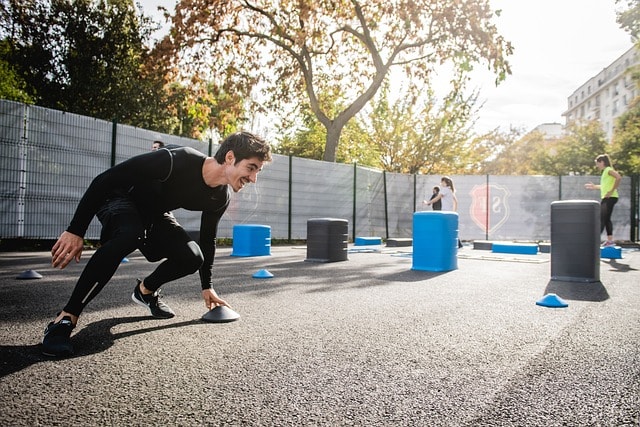
Plyometrics is one of the most effective cross-training workouts for runners as it gets the body used to lifting off the ground and landing softly, all while increasing V02 max and giving your quads the workout of a lifetime.
Imagine squats and lunges, but with jumping and rotating in between sets. Sounds fun, right?
Benefits:
Improved V02 max
Improved running form
Builds leg muscles
3. Stair Master or Hiking
If you’re considering a trail-running event or know your next race has excessive elevation changes, you might consider a training program that includes levels of incline and decline.

For those blessed with trails in nearby, hiking is a great way to cross-train and get outdoors for a little while. Hiking is better on joints than running and is sure to help build muscles in your legs (as well as your lungs).
While many runners may prefer the gym over the outdoors, hitting the stairs is a great cross-training session with the same benefits. We recommend starting out slow as the fight against gravity will likely have your heart rate outside of your comfort zone.
Benefits:
Builds leg muscles
Less impact to joints
Improved V02 max
4. Rowing
If you’re looking for a fun way to cross-train and build upper body strength, rowing is an excellent cardio activity that can be added into your plan.

Primarily a shoulder and back workout, rowing machines can also be utilized to work the lower body, specifically the quads, calves, and glutes. Professional rowers are known for their tapered V-shaped bodies, so if you’re hoping for a well-rounded and lean physique, this may be one of the best exercises for you.
Benefits:
Builds upper body muscle and physique
Improved endurance
Low impact to joints
5. Yoga or Pilates
Many runners, even the ones who warm-up and stretch properly, usually end up with muscle tightness at some point in their training.
Yoga is a series of advanced stretches, positions, movements, and meditations that typically only require a mat and (sometimes) a yoga block. This might sound simple, but don’t be fooled. The positions can be very challenging.

Pilates is usually performed in a studio setting on a machine called a reformer, which combines a sliding table with resistance springs and bands which get connected to your legs or arms. The movements are great at working many of the smaller muscles not usually activated in running.
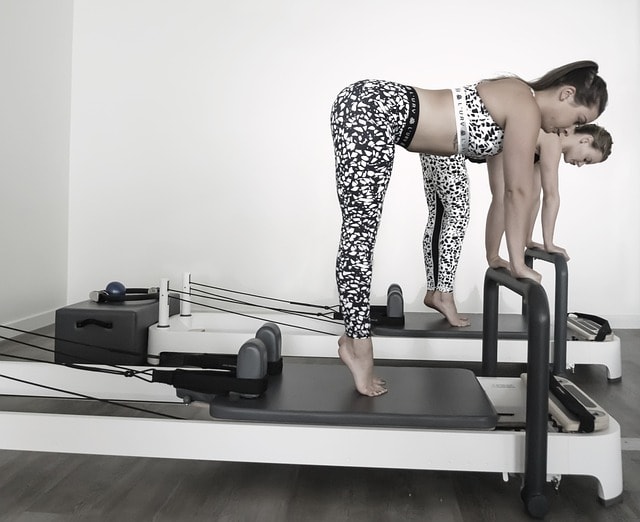
Yoga and Pilates really are as beneficial as people claim – from flexibility and range motion, to balance and posture, these exercises will prove their worth in your weekly cross -training sessions.
Benefits:
Improved flexibility and range of motion
Improved posture
Improved balance
6. Calisthenics
If you’re one of the many athletes looking to cross-train from home, calisthenics is an option that requires little or no equipment.

While gym-goers typically strength training with dumbbells or machines, calisthenics creates resistance from your body weight. Activities such as pushups, pullups, or burpees are great options for those looking to get a full-body, muscle building workout.
Cross-fit training is one of the more common calisthenics programs in existence and is surely a worthwhile method to incorporate cross training for runners.
Benefits:
Full body muscle building
Reduced risk of injury
Improved cardiovascular health
7. Weight Training
It should come as no surprise that lifting weights is the quickest way to build a muscular physique. As one of the oldest methods of exercise, strength training can also serve as an excellent cross-training alternative.

For reasons many will never understand, the average runners fear that building too much muscle would cause them to gain weight, thus decreasing their speed as a runner. This is a folly. In fact, building lean muscle is one of the most effective ways of increasing speed and endurance.
Some of the best strength training exercises for runners include leg press, hamstring curls, calf raises, and core work. However, it is recommended to also work upper body periodically to maintain a well-rounded figure.
Benefits:
Full body strength training
Reduced risk of injury
Increased running speed
8. Swimming
Jumping in the pool and getting in a few laps is one the most beneficial cross-training workouts, as it is low impact on the body and improves heart rate over time.

For those who have access to a lap pool, consider adding 30-45 minutes of swimming into your weekly training program. Aside from working the entire body and the cardiovascular system, swimming also acts as a great stress reliever and is known to improve your mental state.
Benefits:
Full body muscle building with low impact
Improved cardiovascular health
Improved mental state
9. Pool Running
Have you ever been to the beach and tried running through the water back to the shore? You may have noticed how incredibly difficult it is in comparison to running on land. This is because water is roughly 800 times denser than air.

Pool running is also known as “aqua jogging” and is one of the cross-training workouts guaranteed to help improve your running form. Simply enough, the idea is to perform running motions while mostly submerged under the water.
As the body is not used to this level of resistance, expect pool swimming to improve your arm swing, knee drive, and stride after only a few sessions.
Additionally, running in a pool is low impact on your joints making it an effective cross training exercise for injured runners.
Benefits:
Improved running form
Low impact for injured runners to train
Improved cardiovascular fitness
10. Kickboxing
Finally, a cross-training exercise that is fun and guaranteed to have you sweating like a pig is kickboxing. This fast-paced cross-training workout will fly by before you realize you have worked every part of your body, especially your heart and lungs.
Kickboxing is a series of repeated kicks, punches, and combinations, and is a great way to increase your range of motion and open up your hips. Similar to a golfer driving through his swing, or a batter swinging through a ball, runners also require a great deal of hip activation during running, especially during sprinting or elevation changes.

If your local gym does not offer kickboxing sessions, you may consider a quick YouTube search for some free options.
Benefits:
Improved cardiovascular fitness
Full body strength training
Improved running form
Incorporating Cross-Training into Your Routine
Now that you’re aware of so many different options, how do we incorporate cross-training for runners? Here are a few tips to optimize your weekly regiment.
Start by determining your running goals and experimenting with a few cross-training exercises
Find an appropriate mix of high intensity interval training and low impact workouts
Add 1-2 cross-training exercises into your weekly routine
Ensure you give your body rest days to promote strong recovery and prevent overuse injuries
Weekly Regiment Ideas
Every runner has different goals, and the cross-training workouts they decide on should reflect and complement those goals. Here are a few weekly regiment ideas based on your desired improvement.
Increased Speed
Day 1: Hill sprints
Day 2: Calisthenics or Weights
Day 3: Speed work (Intervals or Fartleks)
Day 4: Easy Run
Day 5: Plyometrics
Day 6: Long Run
Day 7: Rest
Improved Running Form
Day 1: Easy Run
Day 2: Pool Running or Kickboxing
Day 3: Speed work (Intervals or Fartleks)
Day 4: Easy Run
Day 5: Yoga or Pilates
Day 6: Long Run
Day 7: Rest
Improved Cardiovascular Health
Day 1: Easy Run
Day 2: Rowing or Cycling
Day 3: Easy Run
Day 4: Easy Run
Day 5: Stairs or Hiking, or Swimming
Day 6: Long Run
Day 7: Rest
Tips for Successful Cross-Training
Cross-training for runners is important and may introduce you to new passions or hobbies. Here are some bits of advice when creating a training program for running performance.
Listen to your body. It’s okay to move your training schedule around to accommodate how you feel.
Change up your routine if you feel you are starting to plateau from certain cross-training activities. This will help keep you motivated and allow your body to continue to adjust and improve.
Stay consistent with cross-training. It’s easy for runners to cross-train for a few weeks and fall back into the habit of solely running.
Common Mistakes to Avoid
If you’re a dedicated runner and adamant on introducing cross-training, there are a few considerations that should be taken into account.
First and foremost, don’t overdo it. Nothing is more painful than going too hard for too long and ending up bedridden for several weeks nursing an injury. Introduce cross-training slowly and build as you become more comfortable.
Cross-training should not replace running, it should complement it. If running is your focus, keep it as your focus. You may grow as an athlete, but don’t fall behind as a runner because you quit long runs and speed work to introduce too many other exercises.
Finally, when you identify the best cross-training exercises for you, stick with them for a while before switching it up. The more comfortable you are with a new exercise, the more of a benefit it will be for you long term.
How to Cross-Train in Summary
Whether you’re an elite runner or just starting out, cross-training is sure to improve your running performance. Start by identifying areas of weakness or areas of desired improvement and experiment in what works best for you.
Consider 1-2 days per week of cross-training workouts, alternating between them and your normal running plan.
Stay focused, take your rest days, and be the best athlete and runner you can be.