
We all have that favorite pair of running shoes, right? The shoes that make you feel as if you’re running on clouds or running faster than usual. The shoes with that perfect color scheme, with a snug and comfortable fit.
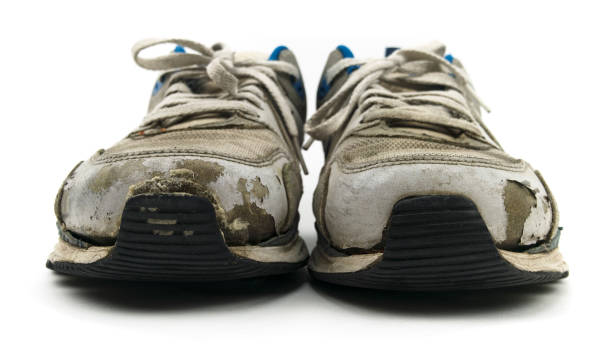
Well, I hate to break it to you, but it might be time for an upgrade.
If you’re a runner, you know that running shoes are one of your biggest assets, critical to success and injury prevention. But, just like tires on a car, they need to be replaced regularly if you’re to expect continued performance.
How long do running shoes last?
I truly wish there was a straight-forward answer to this question. In short, I have found that most of my running shoes have lasted (truly lasted) anywhere between 200-400 miles. I say “truly lasted” because more often than not I have convinced myself that I could get a bit more distance out of my favorite trainers when in all reality they should have been tossed months prior.
Let’s go back to our comparison of tires for your car. The vast majority of manufacturers guarantee the life of their tires in miles (40,000 miles, for example), not an actual duration (such as 24 months). That being said, it would be easy to say that most running shoes should last you about 200 miles.

What would be more important than tracking the number of miles you put on your running shoes would be to simply pay attention every now and then. Check in with your shoes every few runs and check in with your body after every run.
Why It’s Important to Retire an Old Pair of Shoes
Shoe companies put a lot more effort than you may think into the design of their running shoes. They understand the effects running shoes have on the body, and as running shoes wear, as does the impact they have on our feet and body.
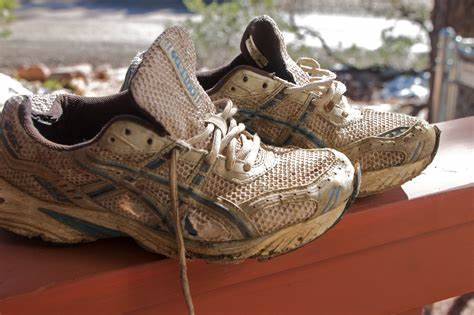
Injury prevention is one of the key reasons that worn out shoes need to be replaced. For those running long distances, the impact on your joints and muscles can grow exponentially worse if your shoes no longer have the support or cushioning they were designed with.
Even without injury or impacts to performance, the recovery time needed between runs may seem longer than usual. If you begin to think it’s time for a new pair of running shoes, it probably is.
How can you tell when it’s time for new shoes?
There are many factors that can help determine if it’s time to toss the old running shoes and invest in a new pair. Your shoes aren’t going to tell you that they need replacing – you’re going to need to pay attention.
Did you notice a new gouge in the outsole of your running shoes? Did you notice a blister on your feet in an area you’re not used to getting blisters?
There are tell-tale signs of wear patterns on your shoes that you should pay attention to.
Factors That Affect How Many Miles Running Shoes Last
Before we list all these signs of wear, let’s take a look at the key reasons as to why running shoes wear more or less quickly than other shoes or for other runners.
The Type of Terrain you Typically Run
Different road conditions should be considered when initially making your shoe purchase. If you decided to order a new pair of Asics Gel-Kayano road running shoes, but your focus is on trail running, you’re going to find yourself in a world of pain and premature wear.
Even if the shoes your purchased were meant for the conditions you typically run, these conditions are likely to change the frequency that they need replacing. Track running might have the lowest impact to wear, while road and trail conditions might have the highest.
How Well did the Shoes Fit?
Although shoe sizes come fairly standard, each company is a bit different. If you have flat feet or wider than normal feet, you may consider different shoe options. Better yet, there are companies that will analyze your gait and foot size and make recommendations best suited for you.
Whenever possible, wear shoes that not only match your foot size, but your foot shape as well.
Running Form and Gait
The intricacies of your gait cycle and running form can also play a role in longevity of your running shoes.
Some runners have issues with under- or over-pronation. Some runners plant on their heels and role to the toe, where others land midfoot.
Even if your form is a bit different from what many would consider “normal”, so long as you are not prone to injury, there may be nothing wrong with your form at all. However, it may have an impact to your running shoe.
How Well do You Take Care of Your Shoes?
Your running shoes take constant and brutal impact while you exercise. You (hopefully) take care of yourself after your run, and your shoes deserve the same treatment!
If they get wet, leave them in a dry area to air out. If they get dirty, clean them. If they smell, deodorize them. You get the point. Neglecting your shoes will only increase the time in which new running shoes are necessary.
5 Signs You Need to Replace Your Running Shoes
By now, you should get the point. Take care of your shoes and check them frequently to determine if it’s time for a new pair. So, how should you do that? Here are the 5 signs you should pay attention to
Sign 1: The Shoes Have Lost Their Bounce
Running shoe technology has come a long way. They are intended to balance comfort and response. The response aspect refers to the shoes ability to propel you forward through your stride.
If you start to notice a difference in your speed or your heart rate needed to maintain that speed, you may need ask yourself if you’re still getting that same bouncy or springy response from your shoes.
Sign 2: New Pains
One of the more obvious signs that you might need to replace your running shoes are unfamiliar pains that pop up during or after a run.

If you’re feeling joint pain in your ankles or knees for the first time, for example, you may need to take a hard look at your shoes. Excessive running on worn out shoes could be detrimental to performance and recovery, and if you’ve got a half marathon in the near future, you could be in for a world of trouble.
Additionally, shin splints or calf pain could also be a sign. Listen closely to your body during and after each run.
Sign 3: Worn Out Treads
While realizing whether or not your shoes still have some bounce to them might be difficult for the average person, one of the more obvious visual signs that it’s time for different running shoes is how much of the tread has worn.
The tread of the shoe is the rubber bottom surface that contacts the terrain. If we once again imagine the tires on a car being ready for replacement, we also need to consider the tread on our shoes.
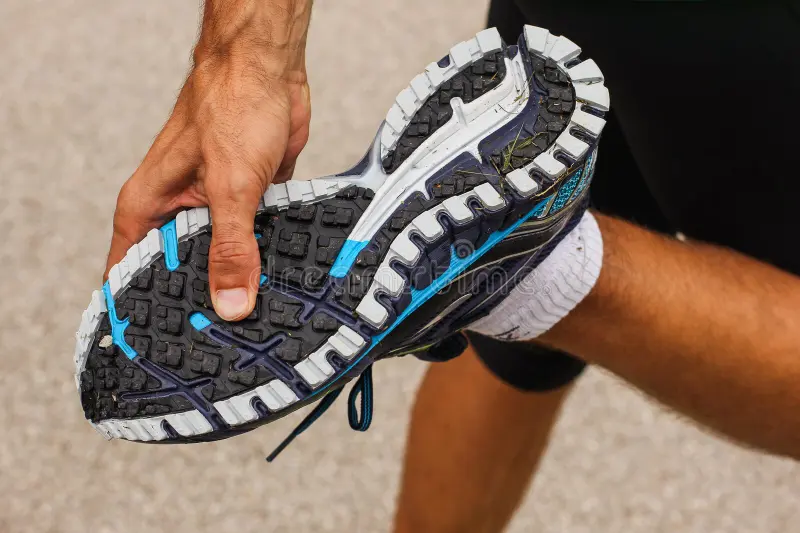
Tread depths for running shoes will be different based on the terrain conditions, so there is no standard depth you should watch out for. What you should pay attention to though is how much it has changed. It might help to take a quick measurement or picture when you first purchase them and then evaluate every 50 miles or so.
Sign 4: The Wear Pattern Is Uneven
Uneven wear on your shoes may indicate uniqueness in your running gait or form, but it may be a blessing in disguise since it could be more visually noticeable than even wear patterns.
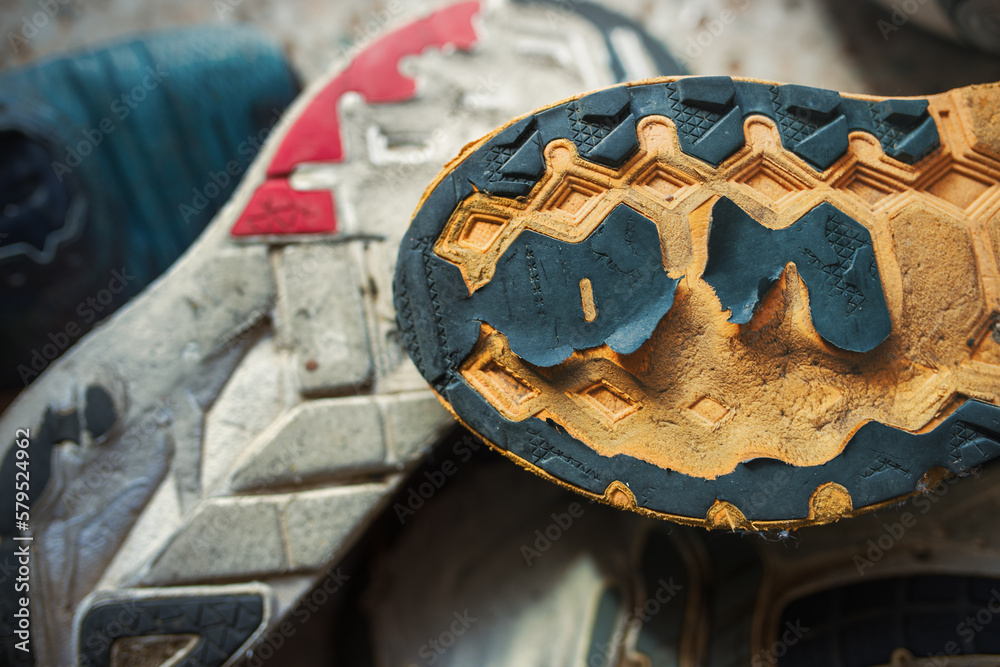
If you under- or over-pronate your feet, you are more likely to experience this condition. Seeing signs of uneven tread depth on the bottom of your shoes should give you all the indication you need to toss them out.
Sign 5: Blisters Are Popping up on Your Feet
Nearly every runner will get blisters, but doing so should not be common. Having a pair of shoes that fit well, offer proper support, and have decent shock absorption are less likely to cause them.
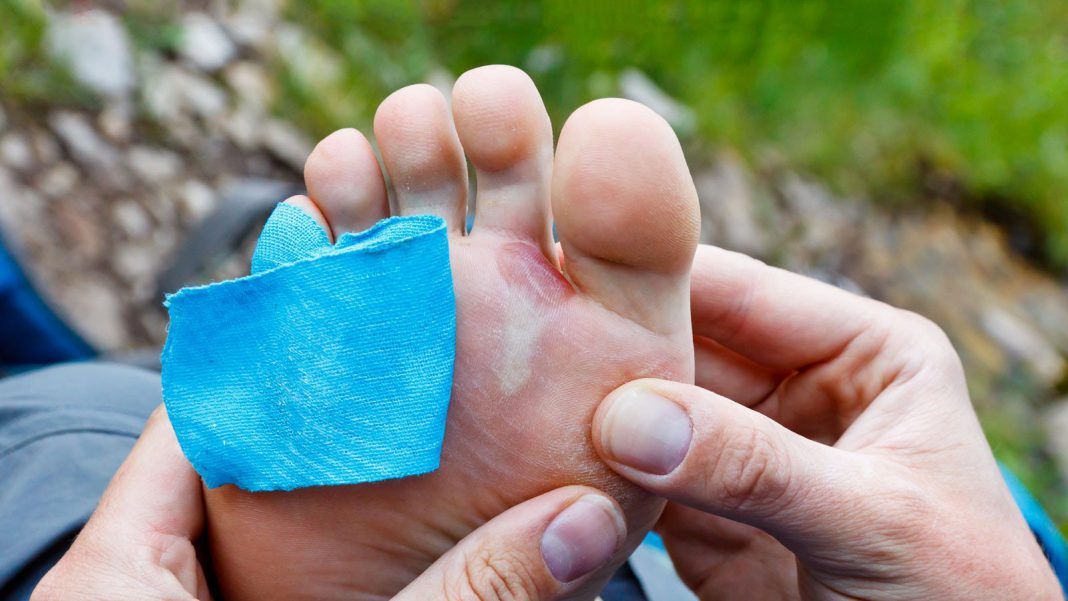
But if over time you start to develop blisters more frequently, it would be neglect to think most shoes just cause this. If you’ve had the shoes for a while and never developed blisters until recently, toss them.
However, if you develop blisters right out of the gate with new shoes, they may not be the best fit for you.
How Do I Make My Running Shoes Last Longer?
Unless you never take them out of the box, your shoes aren’t going to last forever. But proper care and usage can certainly help extend the life of them.
Only Wear Your Running Shoes For Running
Although we may be tempted to show off our new trail running shoes at work or the grocery store, they’re not likely to last much longer than if we wear them solely for their purpose.
If you truly love your shoes and want them to last, wear them only when you need them.
Recognize the Signs of a Fatiguing Shoe
Now that you have an idea of what causes shoes to fatigue and how to identify the signs, start putting it into practice.
You don’t need to create an inspection checklist or spend a half hour determining if you can wear them or not, but a quick visual check doesn’t hurt.
Take Care of Your Shoes
I wish this was obvious to most people. Your shoes should be maintained just like anything else you own. The more you neglect your gear and equipment, the more likely it is to fail on you sooner than you’d hoped.
Keeping your shoes clean, free of debris, odor free, and out of high-moisture areas are some of the simplest methods to increase their life. Do note, however, that shoes will not last forever regardless.
Get fitted by a professional to make sure the shoe is right for you
For some runners, shoes right off the shelf with normal sizes might work just fine with no issues. For the rest of us, however, considerations of foot shape, arch height, width, etc. are too big of factors to ignore.
A quick internet search for custom fitting running shoes may be all it takes to find a store that is willing to analyze your foot, your form, and your gait to get you into the perfect fitting shoe for your tailored comfort and performance. The better your shoes fit, the longer they will last.
Consider Training in Two Pairs of Shoes (Minimum)
Having more than one pair of shoes can also be a great option, especially if your running includes a variety of different terrain.
Having just one pair will possibly lead the shoes to prematurely wear. You may consider having a pair of high midsole-drop, lightweight shoes for road conditions, and more durable low midsole drop for trail running.
Or if you’re a runner who sticks to a specific terrain, having that second pair can ensure overall longevity.
Overview
We love the day our new gear shows up and despise the thought of ever having to get rid our super shoes. Unfortunately, to keep our performance at its peak and lower the risk of running injuries, our best option is to keep them up to date.
Knowing how to visually check and maintain our gear, and by listening to our bodies, are key in increasing our shoes longevity.